Source educational wooden brain teaser puzzle for schools, homes, and training
Find 30 listings for the educational wooden brain teaser puzzle, comparing options like jigsaw puzzles, building blocks, and magnetic stickers. Buyers can evaluate age ranges, materials, and customization features to select suitable items for educational or recreational use.
Key considerations
Products List


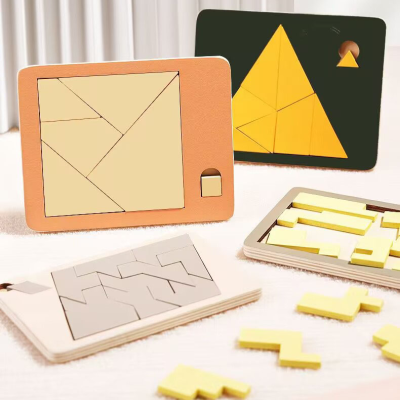
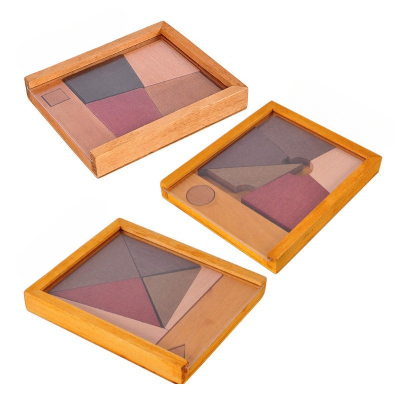


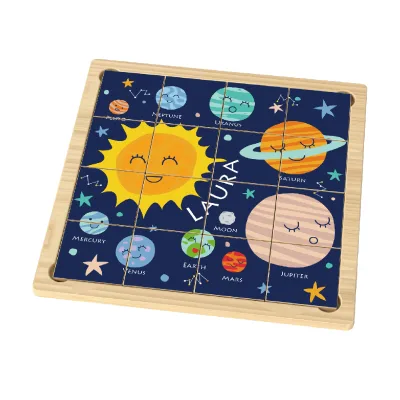


Comprehensive Sourcing Guide
Strategic Sourcing Guide for Educational Wooden Brain Teaser Puzzles
The global market for educational wooden brain teaser puzzles has evolved into a sophisticated sector where material integrity, cognitive design, and supply chain reliability intersect. For B2B buyers, navigating this category requires a disciplined approach that separates marketing narratives from verifiable product attributes. The following guide synthesizes observed market data and technical specifications to provide a framework for sourcing high-quality wooden puzzles. This analysis focuses on the intersection of traditional craftsmanship and modern educational requirements, ensuring that procurement decisions are grounded in factual product characteristics rather than unverified claims.
Technical Specifications and Material Composition
The foundation of any successful procurement strategy for wooden puzzles lies in the precise definition of material and dimensional specifications. Based on current market observations, the primary material for this category is consistently identified as wood, with specific listings highlighting "Qualified Wood" and "Plywood" as the standard substrates. This distinction is critical for buyers, as the density and layering of plywood can significantly impact the durability and weight of the final product compared to solid wood alternatives.
Dimensional consistency is another key technical parameter. Observed product dimensions vary significantly based on the specific puzzle type, ranging from compact sets measuring approximately 10.63 x 7.09 x 0.39 inches to larger educational kits sized at 18 x 10 x 4 cm. The weight of these items also fluctuates, with single units observed at 3.17 ounces and others weighing up to 0.45 kg gross. Buyers must verify that the "Single package size" and "Product Dimensions" align with their logistics requirements, as discrepancies in these figures can lead to unexpected shipping costs or storage issues.
Furthermore, the complexity of the puzzle is often defined by its piece count and configuration. Data indicates a wide range of quantities, from 40 pieces per set to 96 pieces per carton, suggesting that the "Type" of puzzle can vary from simple jigsaw formats to complex building block systems. When evaluating technical specifications, procurement teams should request detailed bill of materials (BOM) to confirm the specific grade of wood used, ensuring it meets the "Qualified Wood" standard observed in high-confidence listings.
Compliance Standards and Certification Verification
In the realm of educational toys, compliance is not merely a regulatory hurdle but a fundamental component of product safety and market access. While some background information suggests the existence of ISO 9001 and BSCI certifications, these should be treated as potential supplier attributes rather than guaranteed product features. Buyers must actively verify that any supplier claims adherence to specific safety standards relevant to the target market, such as ASTM F963 in the United States or EN71 in Europe.
The provided data indicates that product standards are often listed as "AS CUSTOMZIED," implying a high degree of flexibility in meeting specific client requirements. This suggests that the supplier may not adhere to a single, rigid global standard but rather tailors their compliance documentation to the buyer's needs. Consequently, procurement teams must explicitly request current test reports and certification documents for each batch of wood puzzles. Relying on general statements about "Qualified Wood" is insufficient; the buyer must confirm that the wood treatment processes, such as the application of non-toxic finishes, have been validated by independent third-party laboratories.
Additionally, the "prod_standard" field often references specific model numbers or custom codes. Buyers should ensure that the compliance documentation explicitly references the model number of the product being purchased. This prevents a scenario where a supplier provides compliance data for a different, perhaps safer, model while delivering a product that does not meet the same safety thresholds. The absence of a specific certification number in the initial product listing is a red flag that requires immediate clarification before any order is placed.
Cost Drivers and Pricing Dynamics
Understanding the cost structure of wooden brain teaser puzzles is essential for negotiating favorable terms and maintaining healthy profit margins. The observed price range in the market spans from $0.50 to $40.00 USD, a wide variance that reflects differences in material quality, design complexity, and order volume. The lower end of this spectrum likely corresponds to simpler designs with fewer pieces or lower-grade wood, while the upper end may include intricate models with custom packaging and advanced educational features.
A significant cost driver is the Minimum Order Quantity (MOQ). Market data reveals an MOQ range from 1 unit to 3,000 units, with specific listings citing MOQs of 500 or 1,000 pieces. This variability allows buyers to scale their orders based on demand forecasts, but it also introduces a trade-off between unit cost and inventory risk. Higher MOQs typically result in lower per-unit costs due to economies of scale in manufacturing and shipping, but they require a larger upfront capital investment.
Another factor influencing cost is the customization level. Listings indicate that "Customization" is available, including options for "Customized Logo" and "AS CUSTOMZIED" standards. Customization inevitably adds to the production cost due to the setup time for new molds, printing plates, or packaging designs. Buyers should request a detailed cost breakdown that separates the base unit price from the one-time setup fees and the per-unit customization surcharge. This transparency is crucial for accurate budgeting, especially when comparing suppliers who may bundle these costs differently.
Typical Applications and Target Demographics
Educational wooden puzzles serve a diverse range of applications, primarily targeting the development of cognitive skills in children. The observed age ranges for these products span from 3 years and above to 8-13 years, with specific segments targeting the 5-7 year demographic. This wide age spread indicates that the product category is not monolithic; rather, it encompasses a spectrum of difficulty levels designed to match the developmental stage of the user.
The "Level of Difficulty" is frequently listed as "Beginner," suggesting that many products in this category are designed for early learners. However, the presence of "Expansion Pack" options and "Traditional Building Blocks" implies that the ecosystem can grow with the child, offering more complex challenges as their skills improve. The "Genre" is consistently identified as "Educational," with functions explicitly stated as "Playing, brain training," and "Developing Intelligence." These attributes make the products suitable for a variety of settings, including home use, preschools, and specialized learning centers.
For B2B buyers, understanding the specific application is vital for marketing and distribution. Products with a "Member" count of less than 4 and a "Time" requirement of less than 0.5 hours are ideal for quick engagement activities or classroom rotations. Conversely, more complex puzzles with higher piece counts may be better suited for individual study or extended play sessions. Buyers should align their product selection with the specific educational goals of their target customers, ensuring that the cognitive load of the puzzle matches the intended learning outcomes.
Supplier Evaluation and Operational Capabilities
Evaluating potential suppliers requires a deep dive into their operational capabilities and production history. The data indicates that the "Place of Origin" for these products is predominantly China, with specific mentions of Zhejiang as a manufacturing hub. This region is known for its robust toy manufacturing infrastructure, but it also necessitates rigorous supplier vetting to ensure quality consistency.
Key evaluation criteria should include the supplier's ability to handle "OEM/ODM" requests, as many buyers require private labeling or custom designs. The availability of "Customized Logo" services suggests that suppliers are equipped to handle branding requirements, but buyers must verify the lead times associated with these customizations. Additionally, the "prod_packing" specifications, ranging from "Carton" to "Color Box Packaging," indicate that suppliers offer various packaging options. Buyers should assess the quality of these packaging solutions to ensure they protect the product during transit and meet retail presentation standards.
The "Model Number" and "Product Name" fields provide a way to track specific product lines. A supplier with a diverse portfolio of model numbers, such as CBL4418 and CBL4412, likely has the flexibility to adapt to different design requests. However, buyers should also inquire about the supplier's capacity to handle "Expansion Pack" orders, as this indicates their ability to support product line growth. Finally, the "Selling Units" being listed as "Single item" suggests that the supplier is capable of fulfilling small, direct-to-consumer orders, which can be a valuable capability for buyers testing the market.
Quality Control and Long-Term Procurement Strategy
Implementing a robust quality control (QC) protocol is essential for maintaining the integrity of wooden puzzle products. Given the variability in "Product Weight" and "Dimensions," buyers should establish clear tolerance limits for these attributes. A deviation of even a few millimeters in dimensions can affect the fit of puzzle pieces, leading to customer dissatisfaction. Similarly, weight variations can indicate inconsistencies in wood density or the inclusion of excess packaging materials.
Long-term procurement considerations should focus on building a resilient supply chain. This involves diversifying suppliers to mitigate risks associated with geopolitical instability or production disruptions. Buyers should also consider the "Time" required for production and shipping, ensuring that lead times align with their inventory planning. The "MOQ" flexibility observed in the market offers an opportunity to start with smaller orders and scale up as demand grows, reducing the risk of overstocking.
Finally, buyers should prioritize suppliers who demonstrate a commitment to continuous improvement. This can be evidenced by their willingness to accept feedback, their responsiveness to quality issues, and their investment in modern manufacturing technologies. By focusing on these long-term factors, buyers can secure a reliable supply of high-quality educational wooden brain teaser puzzles that meet the evolving needs of the market. The integration of these strategies ensures that the procurement process is not just a transactional exchange but a strategic partnership that drives value for all stakeholders.
FAQs
What materials are used for these educational wooden puzzles?
The puzzles are constructed from qualified wood and plywood. These materials ensure durability while maintaining a lightweight profile suitable for children aged 3 and above.
Which age groups are suitable for these brain teaser toys?
Products target children aged 3 and above, with specific models designed for ages 5 to 7 and others for 8 to 13 years. The difficulty level is generally beginner-friendly for early learners.
Can buyers request custom logos and packaging for these items?
Yes, customization is available including customized logos and specific packaging types like color boxes. Buyers can also request standards that are customized to their specific requirements.
What is the minimum order quantity for these wooden puzzles?
The minimum order quantity ranges from 1 to 3000 units depending on the supplier. Specific listings indicate MOQs of 500 or 1000 pieces for certain educational toy models.
How do the dimensions vary across different puzzle types?
Dimensions vary significantly, with some sets measuring 10.63 by 7.09 inches and others sized at 18 by 10 cm. Weight also fluctuates from 3.17 ounces to 0.45 kg gross.
Where are these educational toys manufactured?
The products originate from China, with specific manufacturing hubs located in Zhejiang. This region provides a robust infrastructure for producing wooden brain teaser puzzles.